Showing posts with label Automotive Concept. Show all posts

Thursday, June 10, 2010

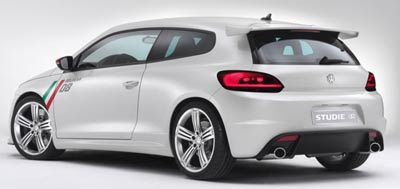
Concept of Volkswagen Scirocco Studie R

Concept of Volkswagen Scirocco Studie R
It was a triumphant drive: in May 2008, three VW Scirocco GT24 cars lined up at the start of the 24-hour endurance race on the Nürburgring track. At the wheel: driving legends the likes of Hans-Joachim Stuck and Carlos Sainz. The teams drove two 238 kW / 325 PS strong race cars to a dual victory at the finish line, first and second in their class. Now Volkswagen is presenting a street version of the race car at the 2008 Bologna Motor Show: the Volkswagen Scirocco Studie R Concept. A genuine Grand Tourismo with a 198 kW / 270 PS engine that delivers aggressive propulsive power. This power is distributed by a 6-speed dual clutch transmission. Adapted directly from car racing are the coilovers, the four-piston brake calipers and a sound-optimized exhaust system with its oval, polished tailpipes.

Concept of Volkswagen Scirocco Studie R
Visually, in many respects the concept emulates the race car version. Take the front end, for example: here the design adheres to the motto "Form follows function"; it features three large air inlet openings that guarantee optimal cooling of the brakes and engine. The front splitter that was added minimizes aerodynamic lift of the front axle. Also adopted from the racing version is the engine hood with its auxiliary air vents.

The radiator screen, diffuser and underside of the rear spoiler are treated in high-gloss black, and this provides a strong contrast to the white exterior paint. Supplemented by a "Bologna 08" badge, red and green stylistic elements on a white background create an Italian tricolor. The outside mirrors are also coordinated with this color scheme.

Concept of Volkswagen Scirocco Studie RThe Interior
Italy's national colors are also represented in the interior. White and black create the basic theme, similar to the exterior color of the Volkswagen Scirocco Studie R. The seams of the Recaro racing shell seats, steering wheel, front armrest, gearshift lever trim and floor mat edging are designed in the colors of the tricolor. Inside, nappa leather in "Deep black" and "Berry white" is applied to the uncompromisingly designed racing shell seat. The shell seats are upholstered with a deep black leather in carbon look. An eye-catching feature here is the conspicuous yet refined contrast of low and high-gloss elements of the carbon structure. Interior accents also consist of genuine carbon composites. The footwell features aluminum pedals specially designed for this vehicle.

The Toyota FT-HS Hybrid Sports Concept

The Toyota FT-HS Hybrid Sports Concept
The Toyota FT-HS hybrid sports concept.

The FT-HS incorporates hybrid capability while maintaining sports car essentials, such as a sleek profile, lightweight aero-dynamic materials, and an advanced high-output powertrain for revolutionary acceleration and optimal performance. This 21st century sports car is fun-to-drive with eco-friendly benefits such as ultra-low emissions and fuel efficiency. The FT-HS appeals to an emerging buyer who grew up eco-conscious and perceives technology as a necessity, not a luxury.

This two-plus-two concept is a front-engine, rear-drive sports car with a projected zero-to-60 acceleration in the four-second range. A powerful V6, 3.5L-engine is coupled with a 21st century sports hybrid system with a target power output of approximately 400-horsepower. At a mid-priced market position, FT-HS would be a true "attainable exotic" with 21st Century performance.

FT-HS expresses the core values of a Toyota Brand design strategy that combines two key elements: J-Factor and Vibrant Clarity. J-Factor refers to the local and global acceptance of Japanese-inspired design and cultural sensibilities.

The exterior design was led by Calty designer, Alex Shen. From a design perspective, the theme of the FT-HS achieves sleek, taut surfaces in its exterior features - especially in the doors and body style. The front and rear have been sculpted to remove mass around key functional components. Freeform geometrics define the integration of fluid surfaces contrasting hard-edge "Aero-Corners" which promote smooth airflow and reduce turbulence.

The roof has a distinctive scooped-out section designed to reduce aerodynamic drag and provide head room at the key areas. Made from carbon fiber Kevlar, the roof retracts so that the roof panel and back window pivot fluidly in a downward motion to stow in the rear seat space.
The Toyota FT-HS Hybrid Sports Concept
The vehicle's triangular profile has a floating "C" pillar, aero corners, a full upper-body pan, and innovative open top. A hood features a scalloped channel, exposing the hybrid engine. Integrated component architecture can be seen in the aerospace-inspired lighting. The tail lamp unit spans the entire rear, and has an integrated retractable spoiler. Light-emitting diode (LED) clusters are located in the headlamps and the wing for energy-efficiency and decreased heat loss. Other exterior features include a speed-activated wing that elevates at high speed for additional stability and traction. The rear showcases a carbon fiber lower diffuser with integrated wide exhaust and carbon fiber wheels.

The Toyota FT-HS Hybrid Sports Concept
The driver-oriented interior was created by Calty designer, William Chergosky and exudes sleekness, technology, and performance. The lean skeletal look is achieved with exposed cross-car architecture and high-tech materials such as carbon fiber, and titanium. FT-HS' interior features create a dedicated driver's cockpit which include subtractive mass expressions such as cross-car instrument panel structure and delta wing driver pod.

By eliminating the "B" pillar and creating a suspended "C" pillar, the minimalist style works in conjunction with subtractive mass. An integrated instrument panel surrounds the driver, creating an enclosed pod effect. Armrests flow seamlessly into the door and surrounding interior.
The Toyota FT-HS Hybrid Sports ConceptSeating is optimized for a lightweight appearance and function: the seating accommodates four and then coverts to a two-seater when the roof retracts. The passenger-seat area is open with a simple exposed airbag on the cross-car beam.
A telescoping hub-less steering wheel incorporates semi-automatic paddle shifters and allows the meter to be shifted forward in order to shorten the driver's focus-time between the road and meter, and ultimately enhance driver focus.

Toyota FT-HS Concept Vehicle Preliminary Specifications Drivetrain
3.5 Liter V6 hybrid electric
DIMENSIONS (inches)
* Overall Length: 170.27
* Overall Width: 73.23
* Overall Height: 50.79
* Wheelbase: 104.33
Wheels: Carbon Fiber
Tire Sizes: Front 245/35R21 Rear 285/30R21

Modern Renault Megane Coupe Concept

Modern Renault Megane Coupe Concept
The Renault has chosen the Geneva Motor Show to take the wraps off its Mégane Coupé Concept show car which foreshadows a compact production coupe to be released at a later date. Like New Laguna, it points to an evolution towards more fluid, sportier styling from Renault. Renault Mégane Coupé Concept targets drivers who are not only drawn by the notion of driving pleasure but who also seek to express their personality through their vehicle. Mégane Coupé Concept symbolizes Renault's vision of what a genuine compact sports coupe should deliver, namely character and dynamism, two traits epitomized by the show car's unprecedented door-opening kinematics.

Distinctive looks that exude personality and dynamism
The Renault Mégane Coupé Concept provides a foretaste of the forthcoming Mégane Coupe. "This show car emphatically showcases the evolution at Renault Design. Its squatter proportions and powerful, energetic styling talk directly to the driver's senses; they say 'driving pleasure'. The spectacular, unprecedented door-opening kinematics add that little touch of magic which contributes to the dream factor associated with the automobile," explains Renault's Patrick Le Quément, Senior Vice President, Corporate Design. Of a total length of 4.51 metres, Renault Mégane Coupé Concept features a modern, dynamic silhouette with taut lines that seem to suggest perpetual movement, while its alert, expressive front-end looks point at once to a truly dynamic personality.

The juxtaposition of headlamp modules with aluminium-finish air-intakes also conveys an impression of fluidity and movement. The two rows of main and dipped beam lights sit on a crystal-like striated strip which fills the sidelight and daytime running light functions.
The headlamps use high-performance light-emitting diodes which are both long-lasting and extremely efficient. The foglamps also employ LED technology and blend harmoniously with the dynamic, front-end styling.
The shoulder-lines flow along the curvaceous sides before culminating in a squat rear-end which expresses power and movement.

The boot, which pulls open and then lifts to minimize vertical travel, echoes the kinematics of the doors which are divided into two sections. The panelled door itself is topped by a separate glazed area and, as they open, the two parts deploy gracefully and elegantly in an independent movement redolent of dragonfly wings. A carbon arm at the rear of the doors connects them to the body structure and the system ensures particularly easy access for passengers.

In addition to its practical aspect, this technological feature reveals a cabin that blends effortlessly with the elegance and energy expressed by the exterior.

Modern Renault Megane Coupe Concept
The cabin: a compelling extension of the exterior's dynamic voluptuousness
The interior is redolent of the world of contemporary furniture. The independent, asymmetric front seats, which rise up from the sills, seem to float in midair. Their wafer-like forms express an airy lightness, while their enveloping design is a pledge of comfort and holds the occupants firmly in place. The aperture revealed by the open doors carries over to the front seat shells and the upper part of the two rear seats.
This sculptural, one-piece structure, which is finished in fire red lacquer, ensures a seamless link between the exterior and the cabin. The centre console extends through to the rear seats and its layered design recalls the striated bar of the headlamp modules.

The choice of colours and materials is another means by which the exterior and interior have been harmonized to highlight Renault Mégane Coupé Concept's volumes and magic.
The iridescent Dragon Grey body-colour goes well with the dragonfly-like door-opening mechanism and the paintwork's rainbow finish gives a fresh vision of the car every time the light changes: even at a standstill, it appears to be in movement. Meanwhile, the interior's contrasting colour-scheme underpins the dynamic exterior thanks to the blend of fire red lacquer (dashboard, upper part of the centre console, front seatbacks, etc.) and softer black leather or nubuck for the door panels, seat cushions and centre console). The door panels themselves incorporate supple, slide-locking stowage, while the floor is protected by a black, modern, graphic mesh.

Modern Renault Megane Coupe Concept
The cabin equipment is modern and intuitive
The different controls have been inspired by the Renault-pioneered Touch Design approach and are both simple and practical. The central multimedia control is coupled with a display divided into three zones. The central part displays all journey-related information (navigation, radio, music, video, Bluetooth telephone), while the screens either side show the images relayed by cameras incorporated in the exterior mirrors. Renault Mégane Coupé Concept is locked and unlocked using a Samsung F700 mobile phone which serves as a hands-free card and connects to the centre console. Both rear passengers benefit from a portable Samsung P2 audio/video multimedia player with touch screen which they can use to swap files using the mp3/video Bluetooth controls.
The four-zone climate control system allows each passenger to select the temperature they prefer using controls housed either side of the dashboard in the case of the front passengers or on the front seatbacks for rear occupants.
Special care has also gone into ensuring that the cabin is brightly lit. The red backlighting of the instruments contrasts with the surrounding black backgrounds. Meanwhile, the panoramic windscreen extends over the roof to provide additional clarity during the day and blue-hued cabin lighting at night.

A show car dedicated to passion and driving pleasure
Renault Mégane Coupé Concept's generous bumper, wide, low grille and alveolar air-intake point to the presence of a high-performance powerplant under the bonnet.
Indeed, Renault Mégane Coupé Concept is powered by a 200hp (147kW) 2.0 Turbo petrol engine which delivers torque of 280Nm at 2,600rpm and peak power of 200hp at 5,800rpm to ensure punch and flexibility at all engine speeds for everyday motoring pleasure. Mated to a manual six-speed gearbox, the 2-litre turbocharged unit drives Renault Mégane Coupé Concept from a standstill to 100kph in just 7.2 seconds, yet it returns economical fuel consumption of just 6.5 litres/100km (154g of CO2/km).

Renault Mégane Coupé Concept is a compact, stylish, dynamic coupe which delivers undeniable driving pleasure, while its sporty calling is also expressed by its modern, elegant cabin. This show car, which builds on the trend established by Laguna Coupé Concept, sees Renault take its will to dial genuine passion into its cars yet another step forward.

Modern Renault Megane Coupe Concept
Dimensions
* Length (mm) 4,514
* Width (mm) 1,908
* Height (mm) 1,371
* Height with doors open (mm) 2,085
* Wheelbase (mm) 2,749
* Front track (mm) 1,658
* Rear track (mm) 1,648
* Front overhang (mm) 950
* Rear overhang (mm) 815
* Unladen weight (kg) 1,310
* Boot volume (litres) 290
Technical data
* Engine 2.0 T petrol (200hp)
* Power (hp) 200hp (147kW)
* Maximum torque (Nm) 280Nm at 2,600rpm
* Acceleration from standstill to 100kph (s) 7.2
* Standard cycle CO2 emissions / fuel consumption 154g/km / 6.5 litres/100km
* Gearbox Six-speed manual gearbox
* with 'stop and start' system
* Transmission Front-wheel drive
* Tyres 245/35 ZR21
* Wheels 21-inch